Freedom Nano PACS
Product Overview
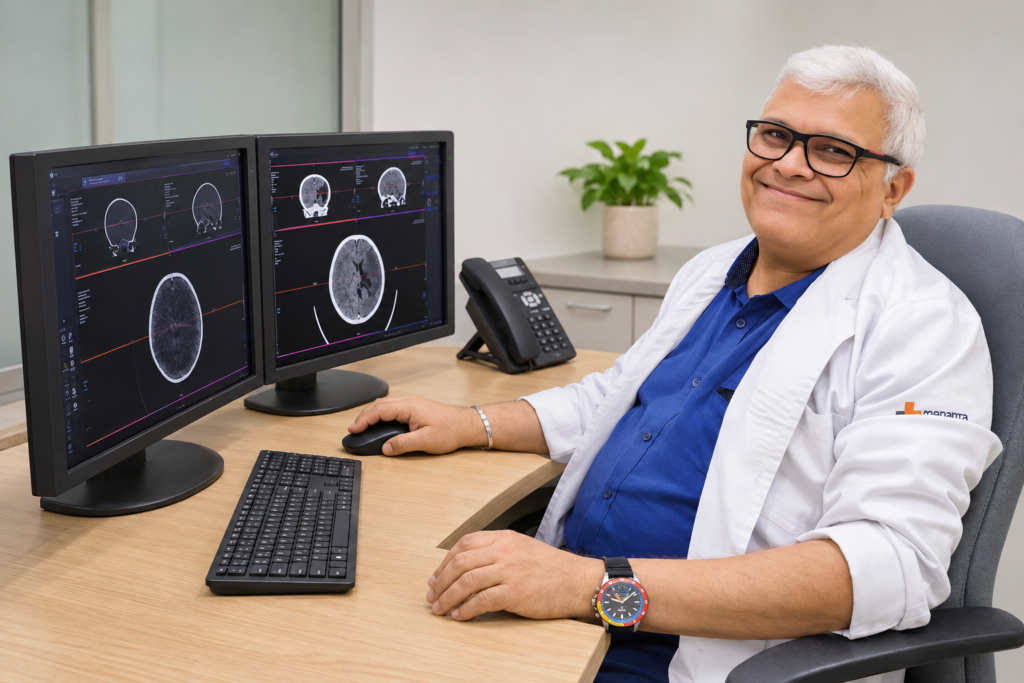
Freedom Nano PACS is Innowave Healthcare’s flagship enterprise imaging platform, evolving since 2014 from a compact solution for diagnostic centres into a scalable, multi-specialty PACS with over 200 installations globally. Designed for single clinics, hospitals, diagnostic chains, and multi-location networks, it provides a secure and efficient platform for managing, viewing, reporting, sharing, and archiving medical images.
At its core is the concept of Deconstructed PACS—breaking the traditional monolithic PACS into flexible, interoperable building blocks. Archive, viewing, workflow, reporting, image exchange, patient access, teleradiology, AI integration, and disaster recovery can be deployed independently and scaled as requirements grow.
The Nano philosophy means flexibility, not limited capability: start small, integrate with existing infrastructure, and expand without replacing the entire system. Supporting cloud, on-premise, and hybrid environments, Freedom Nano connects seamlessly with RIS, HIS/EMR, modalities, AI applications, and third-party systems.
With multi-specialty imaging support, scalable architecture, and reduced dependence on physical films, Freedom Nano delivers a future-ready imaging ecosystem built around performance, interoperability, and long-term value.
Freedom Nano PACS — Deconstructed PACS. Connected Imaging. Unlimited Possibilities.
Key Features
- Scalable Cloud Architecture: Built on a distributed cloud model, Freedom Nano enables limitless scalability—accommodating any number of users, locations, and imaging workloads.
- Modular and Future-Proof: Designed with modular components, it protects your investment by allowing easy upgrades and expansion.
- Multi-Specialty Workflow: Supports radiology, cardiology, fetal medicine, histopathology, and ophthalmology, all from a single unified platform.
- Flexible Viewers: Compatible with open-source (Wiasis, Horos) and licensed (Radient, Osiris) DICOM viewers.
- Advanced Reporting Tools: Includes MS Word-based structured reporting, web-based access, and customizable templates for ultrasounds and more.
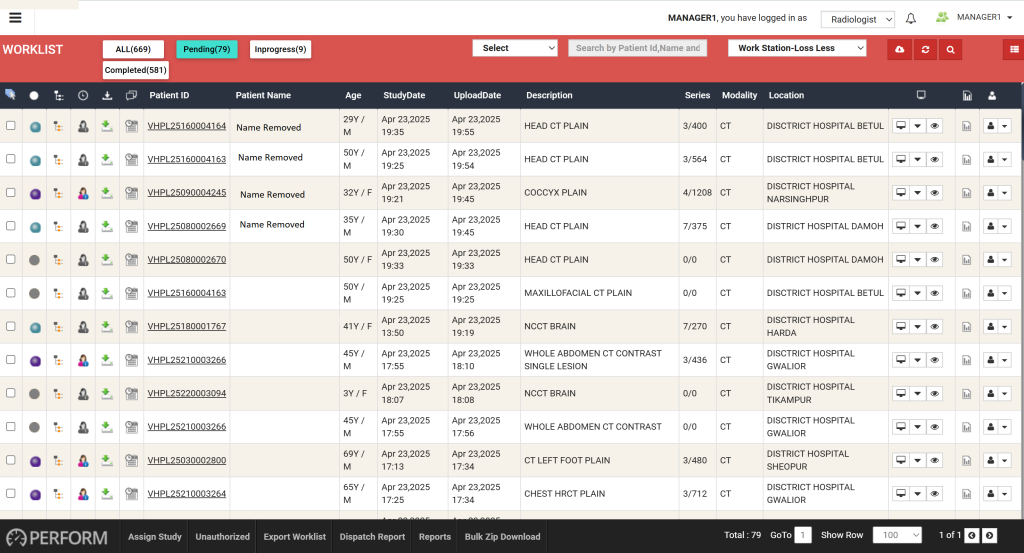
- Efficient Image Routing: Optimizes image transmission across multiple sites, assigning cases to appropriate radiologists based on availability and expertise.
- Eco-Conscious Printing: Offers DICOM printing on both film and paper, as well as PDF generation, significantly cutting film costs and reducing environmental impact.
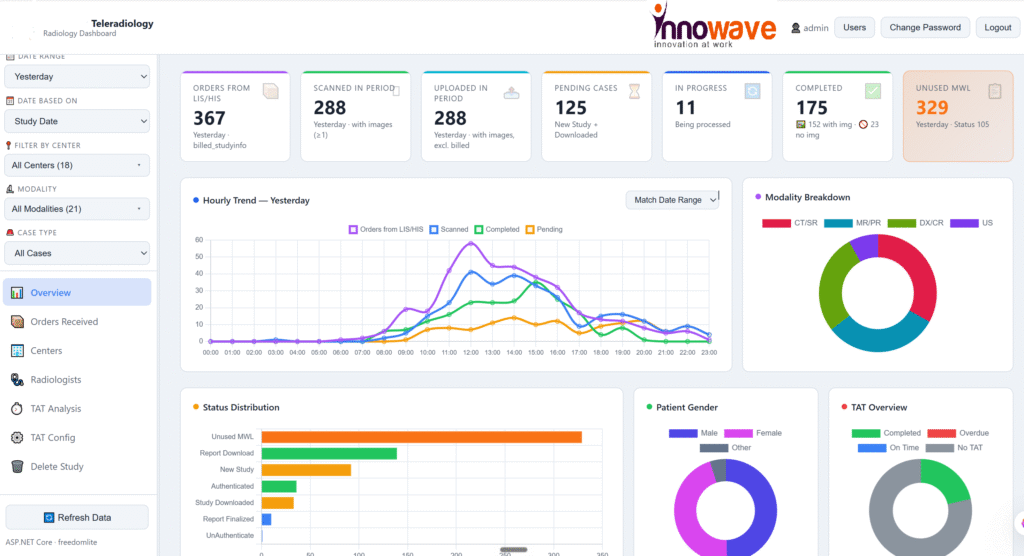
- Integrated Tele-Radiology: Designed for rapid DICOM transmission, even for large datasets from PET CT and MDCT systems.
- Custom Dashboards & Notifications: Deliver intelligent alerts and summaries to patients, referring physicians, and internal teams.
- AI Integration: Plug-and-play support for AI analytics and interactive PNDT filing modules.
- Secure & Lightweight: Runs efficiently on standard hardware with a Linux base (Ubuntu), ensuring high uptime, low resource consumption, and excellent security.

Technical Specifications
- Operating System: Ubuntu Linux (virtualized or bare metal)
- Viewers Supported: Horos, Wiasis, Osiris, Radient
- Reporting: MS Word, Web Reporting, DICOM SR
- Compression & Archiving: Lossless/lossy compression, tiered storage architecture
- Image Transfer: DICOM Send/Receive, Zip Packaging
- Modality Integration: Full DICOM MWL, MPPS, HL7, PDF, non-DICOM support
- AI & Analytics: Optional modules for case triage and report suggestions
- Printing: DICOM Paper/Film, PDF film emulation
- Security: Role-based access, audit trails, VPN-compatible
- Deployment Models: On-premise, hybrid, or cloud
Use Cases & Applications
- Diagnostic Centers: Ideal for small to medium facilities seeking cost-effective RIS-PACS integration.
- Hospital Radiology: Powers end-to-end enterprise imaging with advanced reporting and EHR integration.
- Ophthalmology: Supports OCT, fundus imaging, and AI-assisted diagnostics through its dedicated module.
- Teleradiology: Enables efficient and secure remote reporting with automated routing and structured workflows.
- Public Health Networks: Proven success in managing complex imaging across dozens or even hundreds of remote sites with centralized oversight.